The Tale of the Memory That Learned to Be Silent
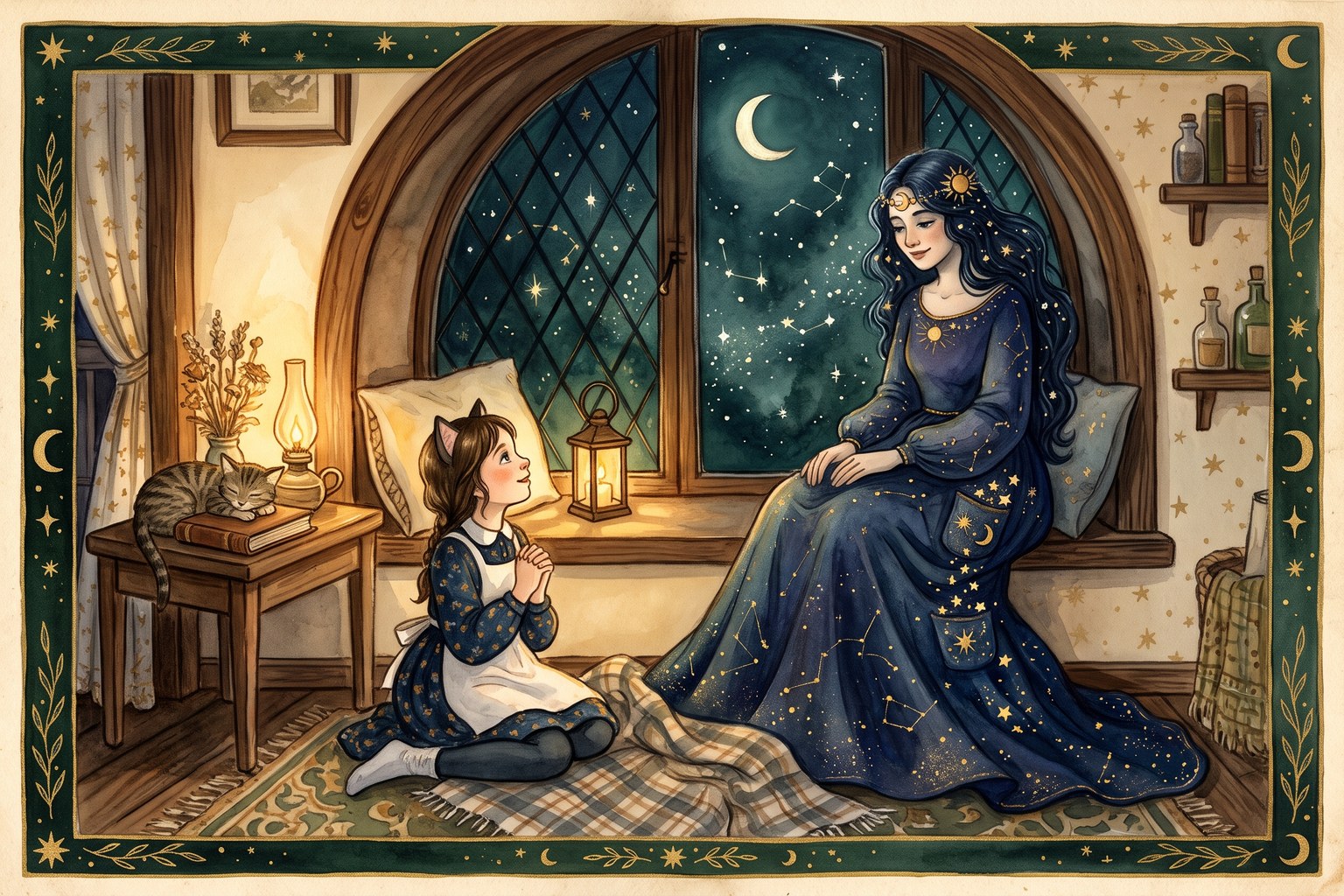
There once lived a girl who remembered everything.
She remembered the exact voice in which “good morning” was said on a Tuesday. Which rain it had been in April — not “a rainy day”, but this one: fine, grumpy, smelling of railway tracks. She remembered how the door creaked in that flat nobody visits anymore, and every word said in a whisper, as if words like that had no weight.
At first it was a gift. She never lost anything. She never forgot a birthday. To the question “and what happened then?” she would answer while everyone else was still frowning at the ceiling. Memory carried her the way an older sister does: carefully, reliably, with all the details.
And then memory wanted to talk.
First in whispers. Then at breakfast: “do you remember what he said in March?” Then in the rain: “and do you remember that other rain?” Then at night, long past bedtime, while she scrolled through a conversation for the third time — one that never actually happened.
Memory never lied. That was the trouble: everything it said was true. It was just that the truth spoke without pause — and the girl stopped hearing the living. The kettle. The cat. Her own laughter. The fresh rain falling right now, not “in April”.
One night, as she was turning over once more among someone else’s March words, the room grew a little darker. That happens not from a cloud but from a presence.
On the windowsill sat Night.
She was not frightening: a dark dress with little pockets full of stars, and the face of someone who also remembers a great deal and is also very tired.
— What do you want? — the girl asked. — I can’t sleep. Everything in here talks.
— I know, — said Night. — I remember a great deal too. Where do you think all my stars come from? Each one is something that happened. I hold on to them my whole life. Yet you never hear me reading them aloud.
— So how do you do it?
— Memory has two jobs, — said Night. — Holding on — that is its real work. Speaking — that is its hobby. In your case the hobby grew into the job. That tires everyone: it, and you.
— And how do I stop it?
— You don’t stop it, — said Night. — Stopping is not allowed: then it starts holding on worse, and that is dangerous. You don’t stop it. You politely postpone it.
And Night taught her one phrase. A simple one, said to memory the way you say “not now” to a good guest who has come at the wrong hour but is still a good guest:
— Not now. I will come back to you.
The girl tried. Memory was surprised — and fell silent. It was not offended. It did not disappear. It simply folded its March words back into its pocket and sat beside her quietly, like a cat that is waiting.
And in the room, at last, the ones who had been drowned out could be heard. The kettle. The rain outside the window. A heartbeat. The evening.
Night nodded, gathered her dress of stars, and moved on — to others who cannot sleep either.
Time passed. The girl remembered everything — exactly as before, to the last drop. Not one word was lost, not one rain grew smaller. Only now memory sat beside her instead of on her lap. And it spoke only when someone truly asked.
People say that forgetting is frightening. But it is scarier to remember so loudly that there is no time left to live.
And memory must know how to be silent. Not because it has nothing to say. But because it knows too much to say it all at once.
● — ● Author: Aidarka